You may look at a fish and think, wow, the colors on that fish are so pretty. But have you ever wondered what's going on beneath the scales?
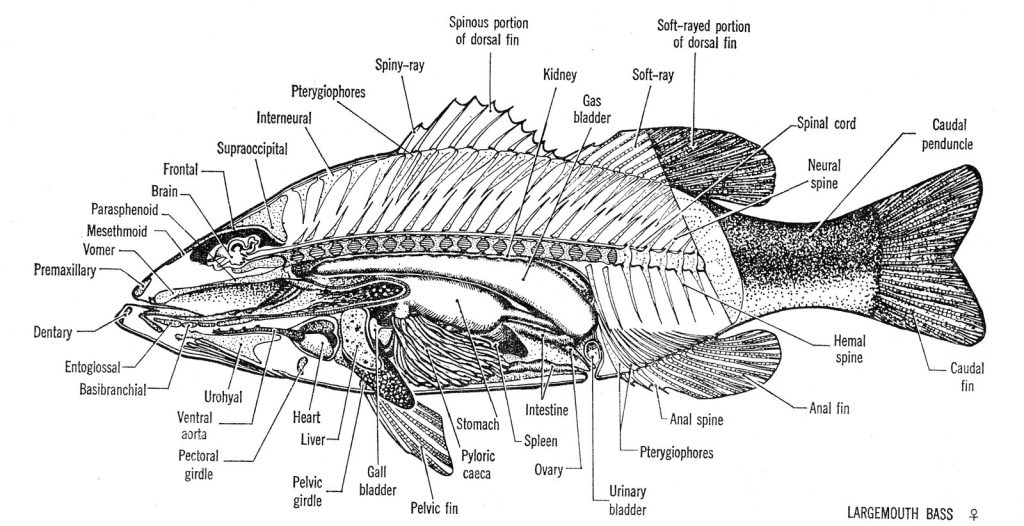
In this image you can see all parts of a fish. The main one I'll be focusing on today is how fish breathe. Obviously we don't live underwater therefore we don't breathe underwater but fish do, so how do they manage to take in air? Well we know fish have gills. These gills (Branchia). Gills aren't only used for breathing, but also to manage ion, acid, and ammonia exchange. Gills are filaments which contain blood capillaries, much like the human alveoli in the lung, that create an area for gas exchange. HOW GILLS WORK: Fish bring water into their mouths and across the gills. oxygen full water passes over filaments which causes oxygen to diffuse into blood thus allowing fish to breathe underwater.
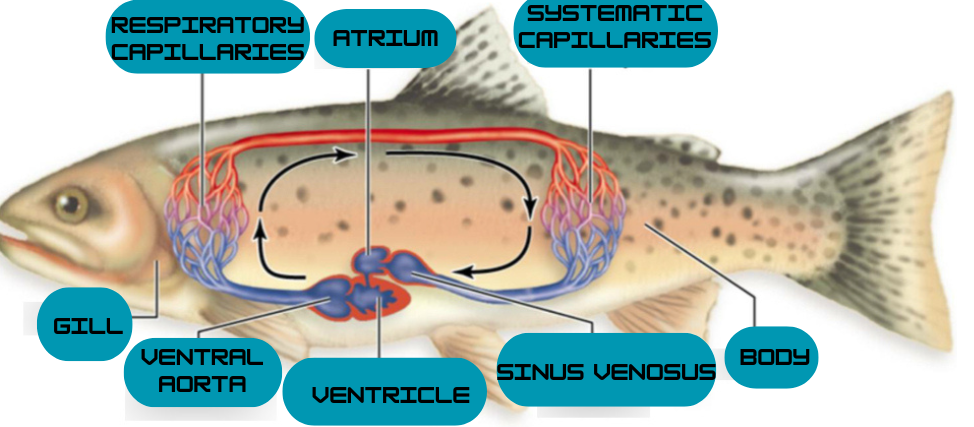
In the last part we talked about how gills work. Now gills contain blood capillaries which are in alveoli, much like the human body. These blood capillaries allow oxygen into blood which distributes it through the body of the fish. Fish have a 2 chambered heart (Atrium= top, Ventricle= bottom). Their heart distributes blood and oxygen throughout the fish similar to the human circulatory system. The ventricles pump blood to the gills while deoxygenated blood returns to the Atrium.
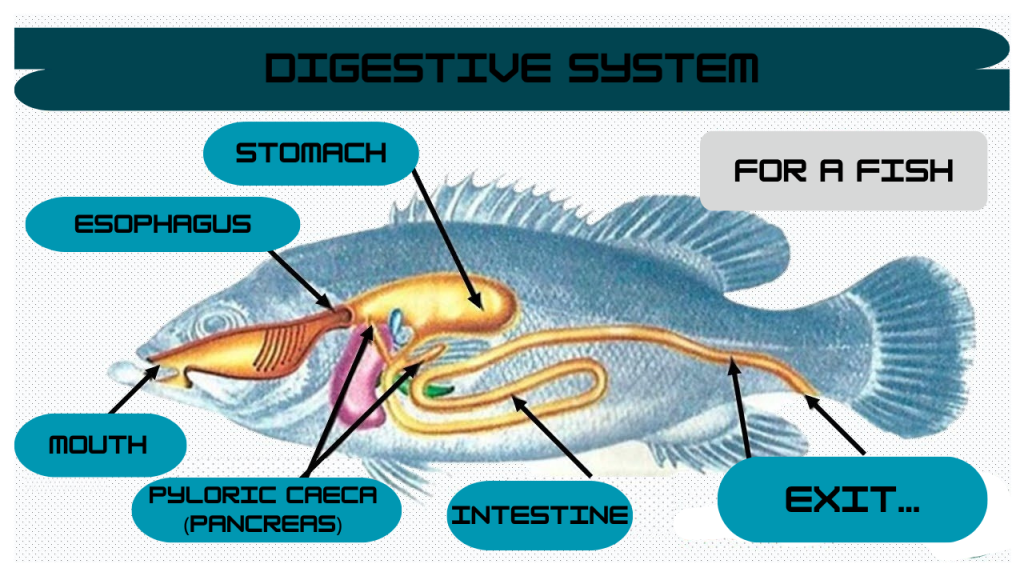
Finding the digestive system. Similar to humans, fish obtain food through their mouth and down the esophagus, into the stomach, broken down, through the intestines and out!